


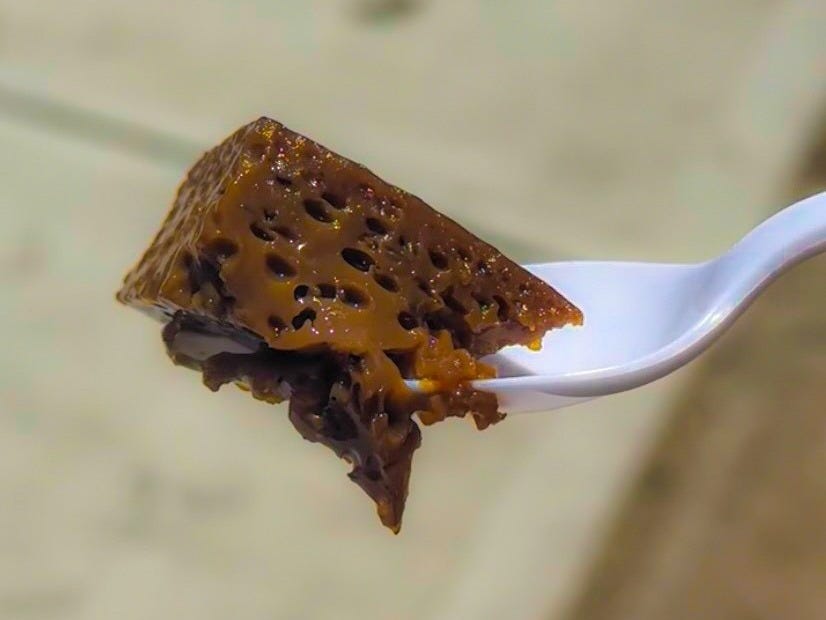
There aren’t really palm trees on Staten Island.
But quietly, their sap runs the dessert world of the borough’s Sri Lankan community, one of the largest in the US.
More specifically, the king is kithul, the fishtail palm. Native to Sri Lanka, the trees tower over the island, with drooping bouquets of ochre, fruiting blossoms. During the spring, tree tappers climb the trunks, cut off the ends of the flowers, and collect the sweet, clear, resiny sap that oozes out over days. When boiled, the sap becomes a deep amber, butterscotchy treacle that is floral and funky at once.
Kithul treacle is not maple, honey, nor molasses, but its own flavor. The stuff is distinctly Sri Lankan, existing about 2000 years before sugarcane was introduced to the country by colonists. At the end of last year, the know-how of kithul tapping was named to UNESCO’s list of intangible cultural heritage.


Despite “having a place in the oldest records” of Sri Lanka, kithul has been deemed “in need of saving,” reports culture journalist Vidya Balachander for NPR. An aging population of tappers, youth emigration to more profitable industries, and monoculture-led deforestation have led to a decline in the cultivation of this labor-intensive tree.
“It’s hard to find here,” tells me Lokesh Kumaravel, a host at AA Lankan’s Cafe on Victory Boulevard, who grew up in Colombo, Sri Lanka. “And the kithul [treacle] we have here tastes so different from home.”
For Sri Lankans in Staten Island today, kithul treacle comes in glass bottles, which are imported to grocery stores like New York Lanka and JNY Lanka. From there, it’s stirred into bold cups of black Ceylon tea and transformed into sweets at restaurants across Victory Boulevard. If you’re eating in the borough, here are four desserts starring kithul treacle, keeping its heritage alive:
