


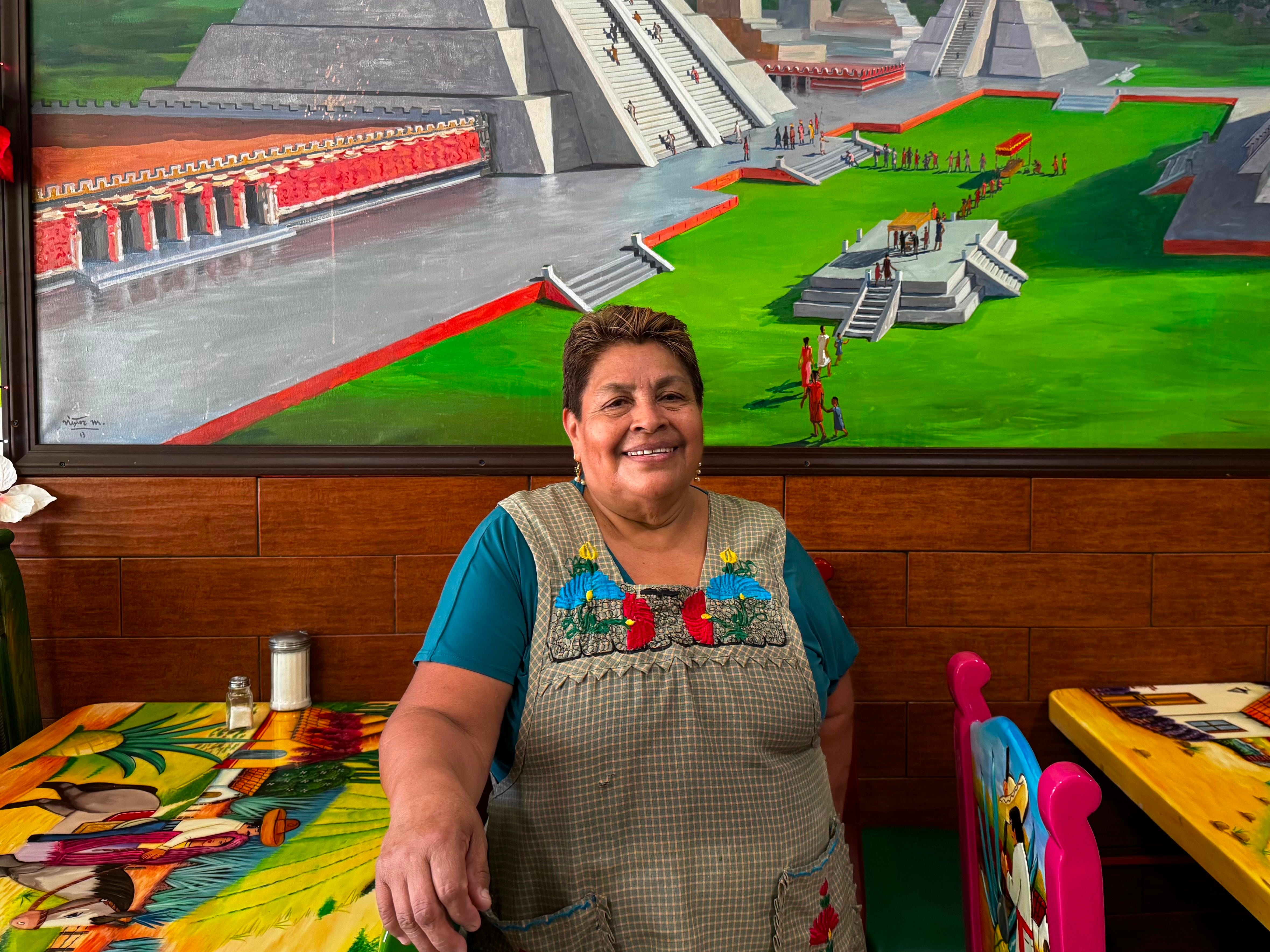
Fresh corn masa ground on a volcanic stone. Mole from Oaxaca. Handmade memelas. Papel picado adorning the restaurants. All are familiar to me, but I’m not in Mexico—I’m in Poughkeepsie.
Poughkeepsie, in New York’s Hudson Valley, is an unexpected hub for Oaxacan food and culture. According to a 1995 report, migration began with just one Oaxacan man from the rural community of San Agustín. Now, with much of Poughkeepsie’s Mexican community tracing its roots to the southern state, the city’s Oaxacan identity is impossible to miss.
“The Oaxacan community has made meaningful contributions to the economic growth, culture, and strength of our city,” Poughkeepsie Mayor, Yvonne Flowers shared.
Those contributions become especially apparent to me as I walk along Main Street.
Just four minutes from the train station, I’m greeted at El Azteca by a giant skeleton in a sombrero. From there, my walk unfolds past family-owned Oaxacan restaurants, a super market stocked with all sorts of dried chiles and other Mexican staples, and storefronts displaying signs that read ENVÍA tu DINERO (“send your money”) in bold print. Those remittances reflect the close ties many residents maintain with family in Mexico—they ultimately reflect 10.3% of Oaxaca’s GDP.
All around me, bits of “Oaxakeepsie” are on full display, existing in a space beyond borders.


“I have spent 25 years here,” says Belen Martinez, owner of Cocina Oaxaqueña. “Both Poughkeepsie and Oaxaca are my home.”
Mariela Lavariega, co-owner of Tortillería Allison, expresses a similar sentiment. “Your roots are wherever God takes you, so I consider both places my home. Poughkeepsie is such a magical place with beautiful, supportive people. People come in with their traditional Oaxacan clothes and immediately they treat you as if they’ve known you for a long time. We welcome everyone with open arms.”
In each business I visit, I see stacked copies of La Voz, a bilingual newsletter produced by Bard College that highlights Hispanic news and culture across the Hudson Valley. While browsing an issue, I learn about Poughkeepsie’s annual Guelaguetza festival—a celebration of Oaxacan heritage featuring local businesses, music, dance, and traditional performances.
The word “Guelaguetza” comes from Zapotec, one of the widely spoken indigenous languages of Oaxaca, and refers to the reciprocal exchange of gifts and services—a reflection of the community-centered values that define the celebration. Originally a pre-Hispanic ceremony honoring Centeótl, the goddess of corn, the festival has evolved into Oaxaca’s most celebrated cultural event. Today, that tradition lives on in Poughkeepsie with the same fervor and pride.
“La Guelaguetza in Poughkeepsie is more than a festival, it’s the living expression of the Oaxacan diaspora in Poughkeepsie and the Hudson Valley,” La Voz’s managing editor, Mariel Fiori, shares. “You feel it in the music, the dances, and especially in the food, from the many Oaxacan restaurants along Main Street that carry these traditions year-round. The festival strengthens a sense of belonging and connection in the Hudson Valley, inviting everyone to become, even if just for a day, part of that shared cultural experience.”
This year’s Guelaguetza will occur on Sunday, August 2nd from 12-7PM at Waryas Park Promenade, Poughkeepsie, NY 12601.
Getting There

Poughkeepsie is approximately two hours from New York City by Metro-North or Amtrak. The businesses featured in this guide are located along Main Street, just a five-minute walk from the train station. The 2-mile route outlined here is walkable, though Uber and Lyft are also widely available.
What To Order
If you want a taste of Oaxaca, you’ll need to look beyond tacos, tortas, and quesadillas. The dishes below showcase culinary traditions that stretch back millennia and remain central to Oaxacan cooking today. Offerings you will find throughout the restaurants, with elements imported directly from Oaxaca include:
Moles: rich, complex, savory-and-sweet sauces typically served over chicken alongside beans, rice and tortillas
Memelas: decadent corn masa cakes topped with a layer of beans, Oaxaca cheese, and an optional protein
Tlayudas: large, crisp corn tortillas imported directly from Oaxaca, layered with refried beans, asiento (pork lard), lettuce or cabbage, avocado, meat, Oaxaca cheese, and salsa
Stop #1 — Tortillería Allison
From the train station, work up an appetite by walking 16 minutes down Main Street to arrive at Tortillería Allison. The interior is adorned with papel picado, or decorative perforated paper, much like the streets of Oaxaca during celebrations. Warm earth tones and children’s cartoons playing on the television immediately put me at ease, reminding me of a family member’s living room.


Angeles (Mariela) Lavariega and Jesus Lavariega are the husband-and-wife team behind Tortillería Allison. After Mariela immigrated to the United States, she struggled to adapt to the food, and she and her father long dreamed of opening a true tortillería. When the pandemic hit, Mariela and Jesus lost their sources of income and, with three growing children to feed, faced serious financial uncertainty. During this period of uncertainty, Mariela revisited the dream she had shared with her father.
“When you try tortillas in the United States, it’s a completely different product than what you’re used to in Mexico,” Mariela explains as Jesus operates a traditional volcanic stone molino, or corn mill, producing high-quality tortillas from locally grown New York corn. “That’s what we want to do—we want to bring back the original, authentic flavor that people long for. The connection we provide to people’s homes and roots is something very beautiful.”


By bringing back tradition, the tortillas at Tortillería Allison have a deeper, more robust flavor that is reminiscent of roasted corn with subtle minerality from the alkaline cooking process. Rather than being an accessory to a dish, it becomes an essential component. The loss of that flavor has a long and complex history; you can read more about the businesses preserving the tradition of Mexican masa here.
Together, Mariela and Jesus brought that dream to life in 2021. They offer traditional Oaxacan staples like memelas and tlayudas. It’s ambitious to order both, but I do it anyway, further doubling down with one of every agua fresca: horchata with cactus fruit, tamarind, and hibiscus. Clearly I’m carried away by being somewhere that feels familiar.
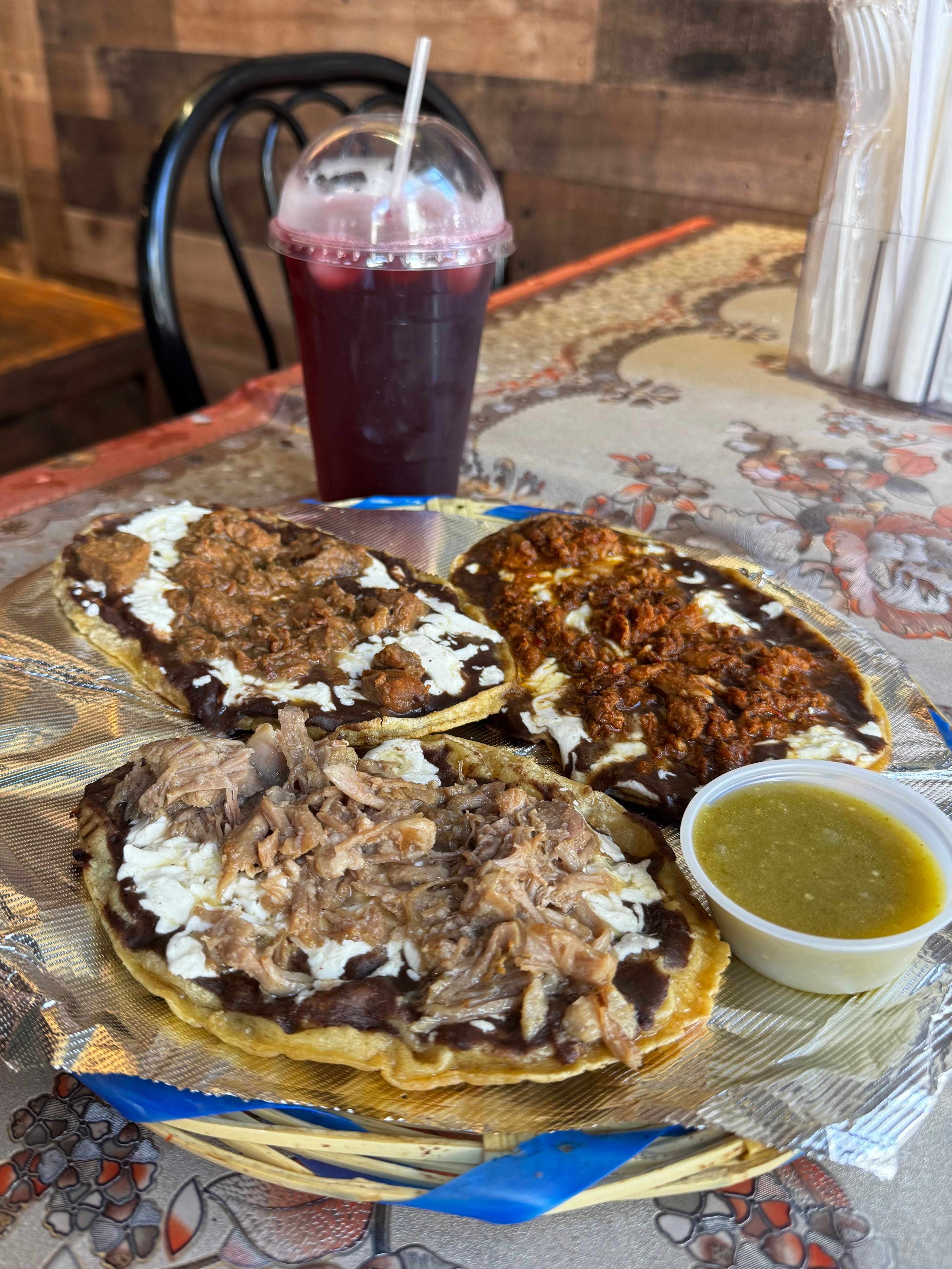
Don’t miss: The memelitas. If you want to try memelas from anywhere, reserve it for Tortillería Allison—since their masa is made in-house, you can really taste the flavor of real corn.
