


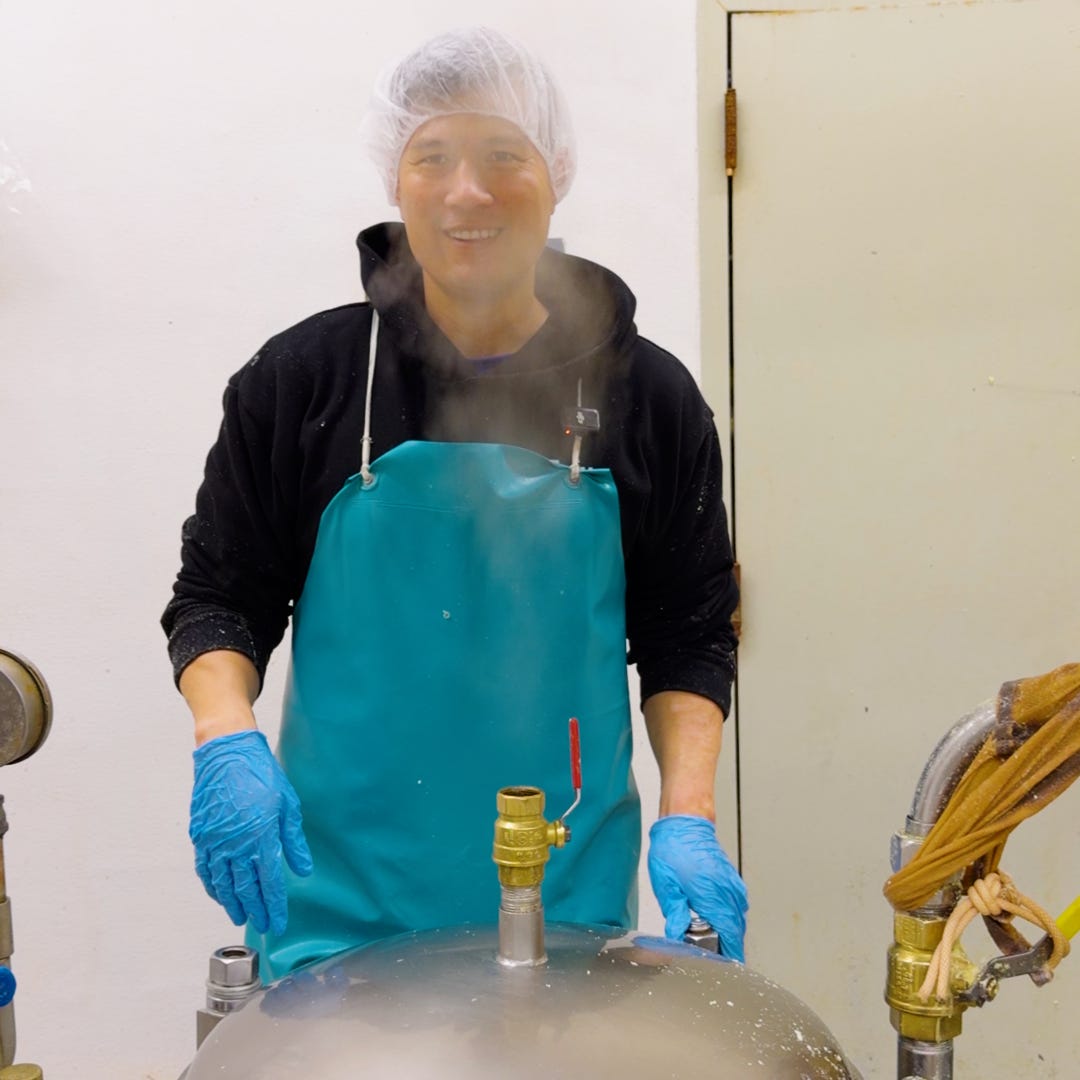
“You basically don’t have time for this interview,” is what I realize, and then say out loud, standing inside of a small warehouse devoted to tofu in southeast Portland. Across from me, through a haze of soy milk steam, is a former professional baseball player wearing a blue rubber apron spattered with curd, grinding his teeth.
Jason Ogata still has the build of a designated hitter, and the tenacity and obsessiveness of a pro athlete. “I mean, yes,” is what he replies, and the conversation goes silent as he twists a valve and more steam obscures my camera. He is the newest owner of the oldest tofu shop in America, and I am in his way.
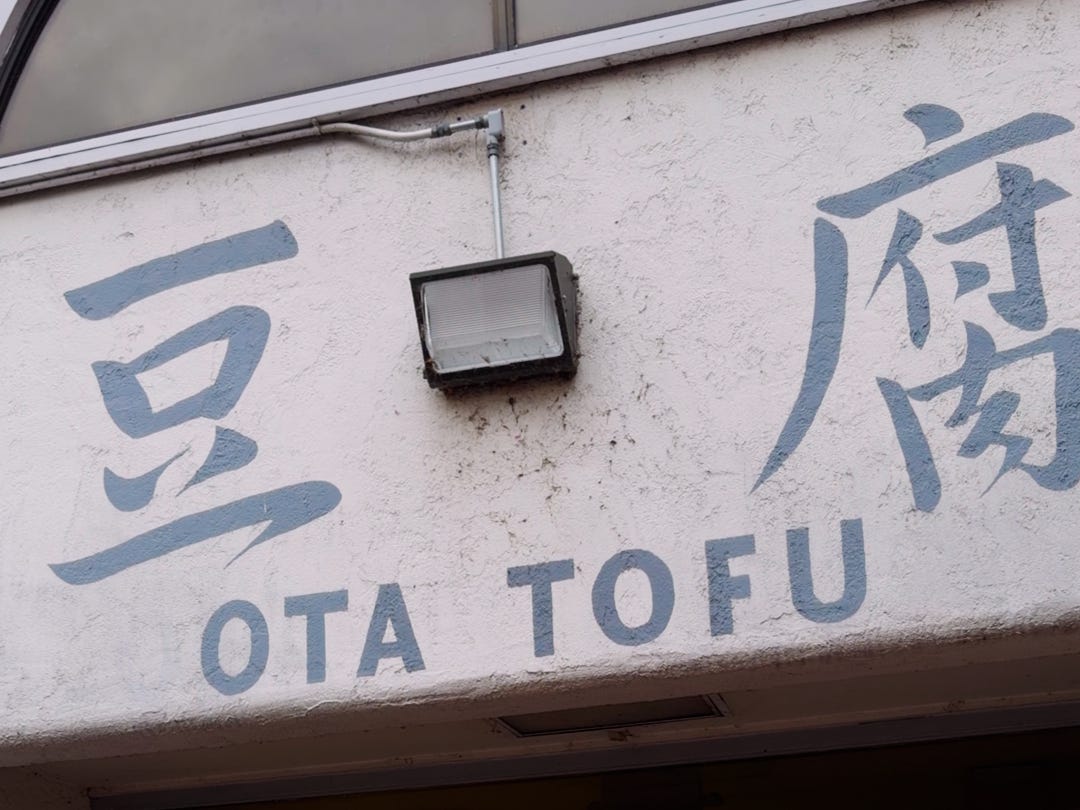
Ota Tofu has survived in Portland since 1911. I use the word survived, because many of the Japanese-owned businesses of the early 20th century in Portland did not. Their owners were placed in prison camps by the US government during World War 2; only 1/3rd of the Japanese community returned, finding their businesses sold or confiscated. The founders of Ota Tofu were brothers, and one died in the camps.
“Luckily the landlord during the war preserved this place and allowed them to come back to keep it going,” Jason says. He learned from the 3rd generation, Ko Ota, who sold him the business in 2019.
Interviewer: Did you have any agreement in with Mr. Ota about keeping things exactly like they were?
Jason: Nope. But I guess we had a mutual understanding.
On its face, tofu doesn’t seem like something that could change much. It’s been industrialized and scaled as an industry worth nearly $500m in revenue annually. But Jason has found obstacles to scaling while preserving the taste he grew up with. “I tried cutting costs and sourcing [the soybeans] from China,” he admits. “But it didn’t produce the kind of tofu taste we wanted.”
Besides the soybeans, the other ingredient at the heart of Jason’s tofu-making process is nigari, the coagulant that binds the soybean into curds. In Chinese tofu-making, gypsum is preferred. They are both among the oldest coagulants for tofu-making, but nigari contributes more umami to the taste, and more custardy-ness to the texture. “It doesn’t have a chemical after taste,” Jason tells me. “It really brings out the soybean flavor.”
“Because of [the nigari], we have to do a lot of hands-on techniques to press it into tofu,” Jason tells me. He has not stopped working since I walked in the door at 6 AM.
The process goes something like this: First, Jason hoists massive buckets of soaking soy-beans into drainage bins, then wheels them across the floor. He scoops them into a grinder, and this slurry flows into a pot where it cooks. It’s then strained through hemp. The larger clumps are strained again by Jason using a cheese cloth that he rocks back and forth. The pure soy milk is collected in a bucket below, while the clumps are dumped into a bag to be sold for animal feed. The nigari is added to the pure soy-milk; Jason mixes it, then watches it curd and determines whether it should be made into firmer or softer tofu. This mixture is then placed in metal bins lined with cheese-cloth and pressed by machine to remove moisture. Eventually, it’s unwrapped, placed in water, and cut by hand.


“I was starting work before 2 AM, to come start the process,” he admits. “Now I come in at like 3:45. So it’s like sleeping in.” He works 10-12 hours usually, between this factory and his newer one, before starting on office work. On the day of my interview, the factory I am in will produce 1,500 pounds of tofu, while the other factory is producing between 3,000 and 4,000 pounds.
“The other [factory]’s more automated, but it’s still pretty hands on.” Jason says. Still, the smaller factory provides value. “This allows us to pay attention to every part of every step of the process… We’ll probably make tofu here this way for as long as we can.”
Across Portland, you’ll find Ota Tofu’s name listed on a restaurant’s menu as a source of local pride. But outside of Portland, it’s still relatively unknown. “We put our brand on the grocery store shelves, and they don’t know it’s different,” Jason told me. Another challenge in the market is shelf-life. Mass-market tofu has a shelf-life of around 3 months, while Ota’s tofu has a shelf life of just 1 month. Jason launched a frozen tofu product to try to compete, it’s available on their website.
“Once they try it, they can taste the difference,” Jason says. He is rapidly scooping soybeans with a large bucket. “Then we have a customer for life.”
This is part 1 of my Portland, Oregon series. I filmed 5 more videos. Let me know if more write-ups like these are valuable to give more context to the videos I make, and thanks for your support. - Rob