Thanks for reading People & Food. Today’s deeply-researched piece is written by Alexa Calderón, who spent a great deal of time tracking down every person in New York who makes masa from scratch—from street vendors and tamaleros to tortillerias and Michelin-starred restaurants. This is a living guide to the people who are preserving the tradition of nixtamalization in New York, amidst a larger story of why this renaissance is occurring in the first place.
“[Making tortillas from scratch is] something so beautiful, and I thank God for giving us the opportunity to bring this product, because it’s not just a tortilla, it’s a connection. It connects people to their childhood memories, to many people’s past, to their country. And being able to bring that here is something very special.” - Angeles Mariela Lavariega, Tortilleria Allison
In New York, it is rare, but not impossible, to find fresh corn masa.
New York has many tortilla factories, and many restaurants that make tortillas by hand. But there are only around a dozen molinos, or corn mills, that process raw corn kernels into fresh, nixtamalized masa—the nutrient-dense corn dough that is the backbone of Mexican cuisine. The difference between the two seems subtle, but yields a massive difference in flavor.
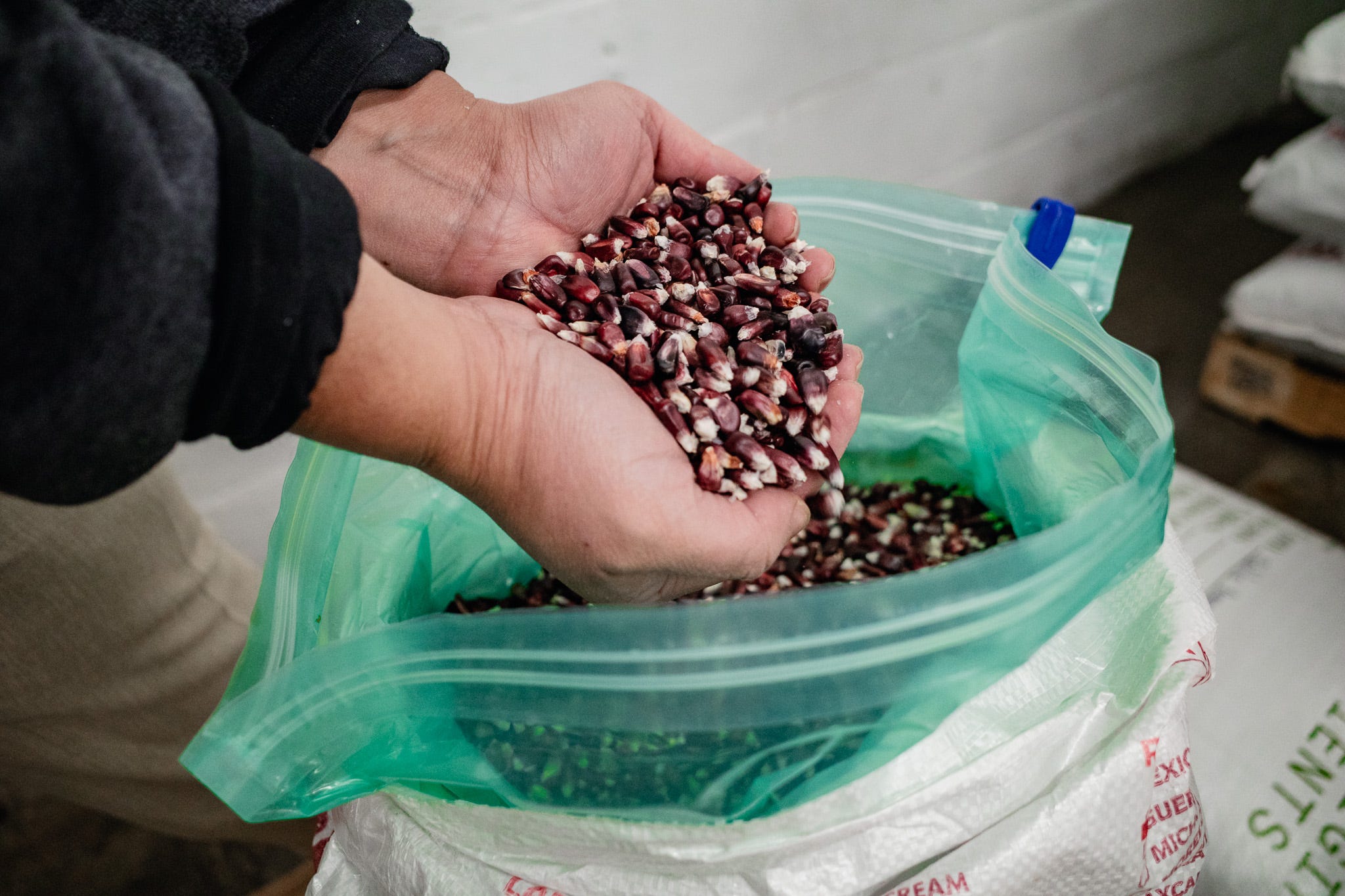
The process of transforming raw maize into masa is time-consuming, often taking up to three days. It begins with the centuries-old practice of nixtamalization, in which corn is boiled in an alkaline solution, increasing both its nutritional value and digestibility. Once nixtamalized, the corn is ground fine or coarse, depending on the desired outcome, using a molino, or mechanically powered mill. After this point, the dough can be rolled and flattened into tortillas, spread across corn husks for tamales, shaped into tetelas, and more.
Most tortillerías, both in the US and Mexico, produce tortillas using processed corn flour, meaning most people have only ever tried corn flour-based tortillas. With corn flour, nearly all of the flavor and nutritional value is lost.
When food tells only half of its story, there is a fundamental disconnect between what we eat and what we understand.
How Fresh Masa Became Rare - and Almost Extinct
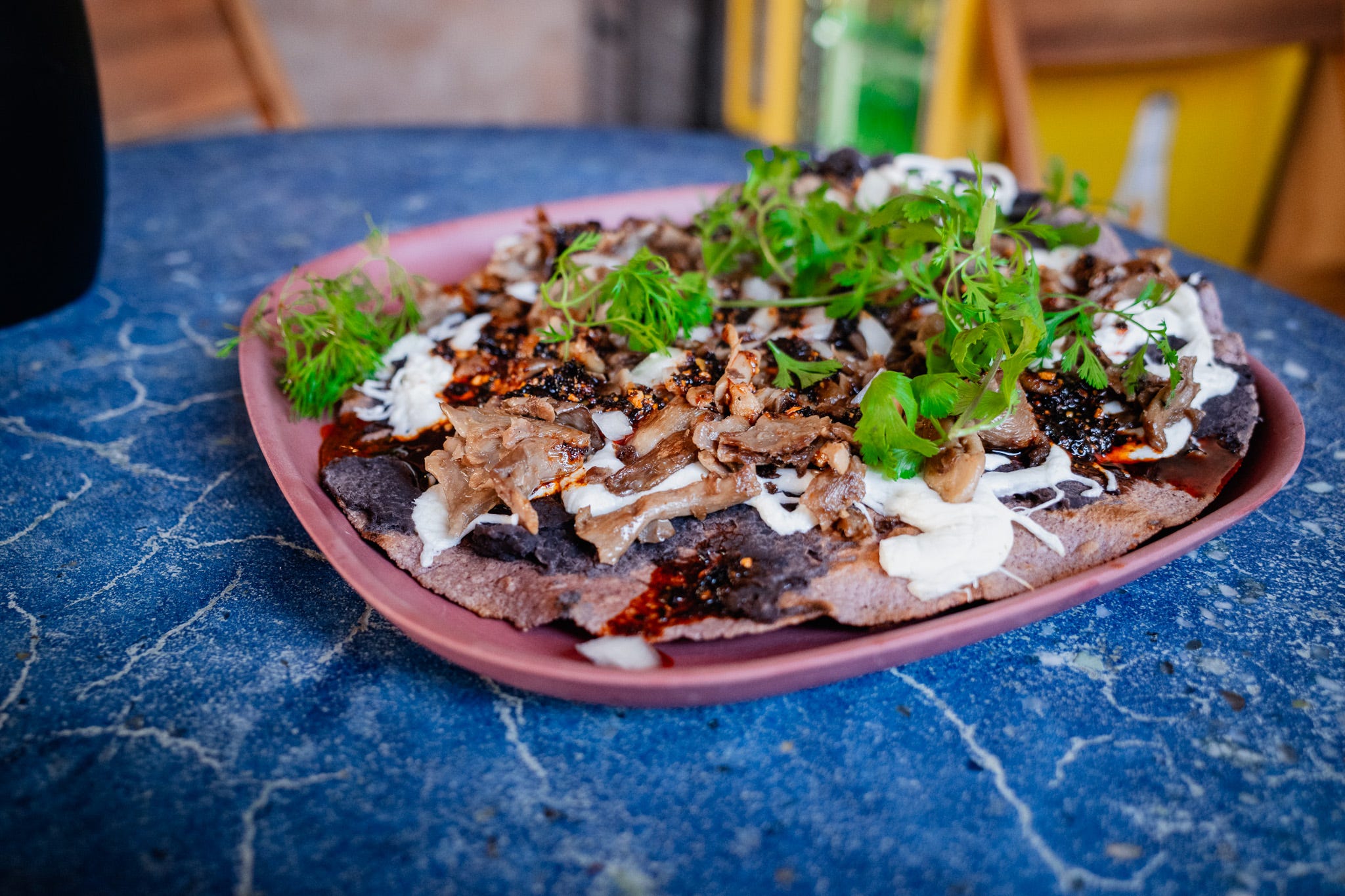
Tlayuda with mushrooms from For All Things Good in Brooklyn.
Corn is more than the basis of masa, it is a connection to the ancestral.
Though built up for centuries, this relationship has faced contemporary challenges, being systematically disrupted through market manipulation and financial interests. Through neoliberal reforms and the implementation of NAFTA, then later the USMCA, fresh corn masa is increasingly difficult to find.
The Battle Over Mexico’s Corn
1980s
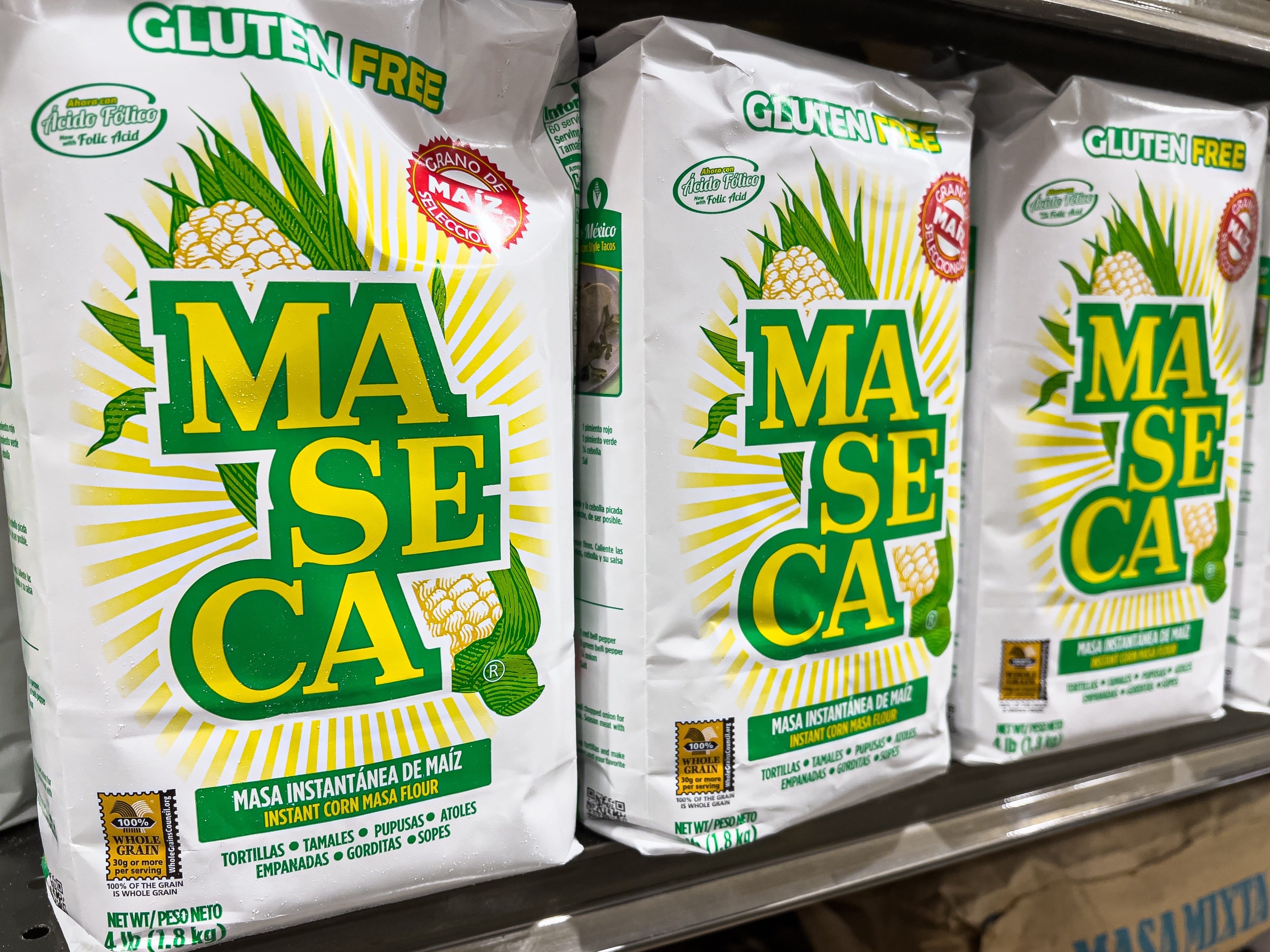
In the late 80s, Maseca, a then-struggling corn-flour company, benefited from personal ties to Mexico’s then President, Carlos Salinas. His administration manipulated Mexico’s traditional tortilla program to favor corn flour over traditional producers.
Policy changes froze the amount of corn provided to artisanal tortillerías, incentivized small producers to adopt flour-based production through the purchase of Maseca’s equipment, and the government declared all growth in the market would be from corn flour. All of this accelerated the decline of fresh-masa tortillas, despite consumer preference for traditional flavor.
1994
Tortilla makers who refused to adopt Maseca’s flour-based production were punished through restricted access to quality corn, forcing many out of business. As Maseca’s market share grew, it captured a large portion of government subsidies, receiving $300 million by 1994.
2006
As of 2006, Maseca’s parent company, GRUMA, controls about 70 percent of Mexico’s corn-flour market. NAFTA-era reforms flooded Mexico with cheap U.S. corn, benefiting GRUMA while harming Mexican farmers, and the removal of tortilla price controls led to soaring consumer prices despite falling corn costs.
These policies didn’t just reshape Mexico’s tortilla economy, they determined what kinds of masa would be available in New York – and most of the US.
Tasting a tortilla made from absolute scratch in New York is rare. So rare that we have foundonly 12 molinos in the entirety of New York state who are making their masa in-house.
Tortilleria Allison is one of only three places outside of the city that is milling its own corn and making fresh, nixtamalized masa from scratch. Their work has helped the locals in the Oaxacan enclave of Poughkeepsie feel an emotional connection to their home.
“A young man took half a pound of tortillas – since we sell them by the pound, he decided to take just half to try them because he wasn’t very sure…” Tortilleria Allison’s co-owner, Mariela Lavariega, explained.
“When his mother tried them, she started crying. She said the tortillas reminded her of the ones she used to buy back in her hometown, and she remembered her mother and her grandmother. She has been in the US for many years, and when she tasted the tortillas, those memories came back to her.”
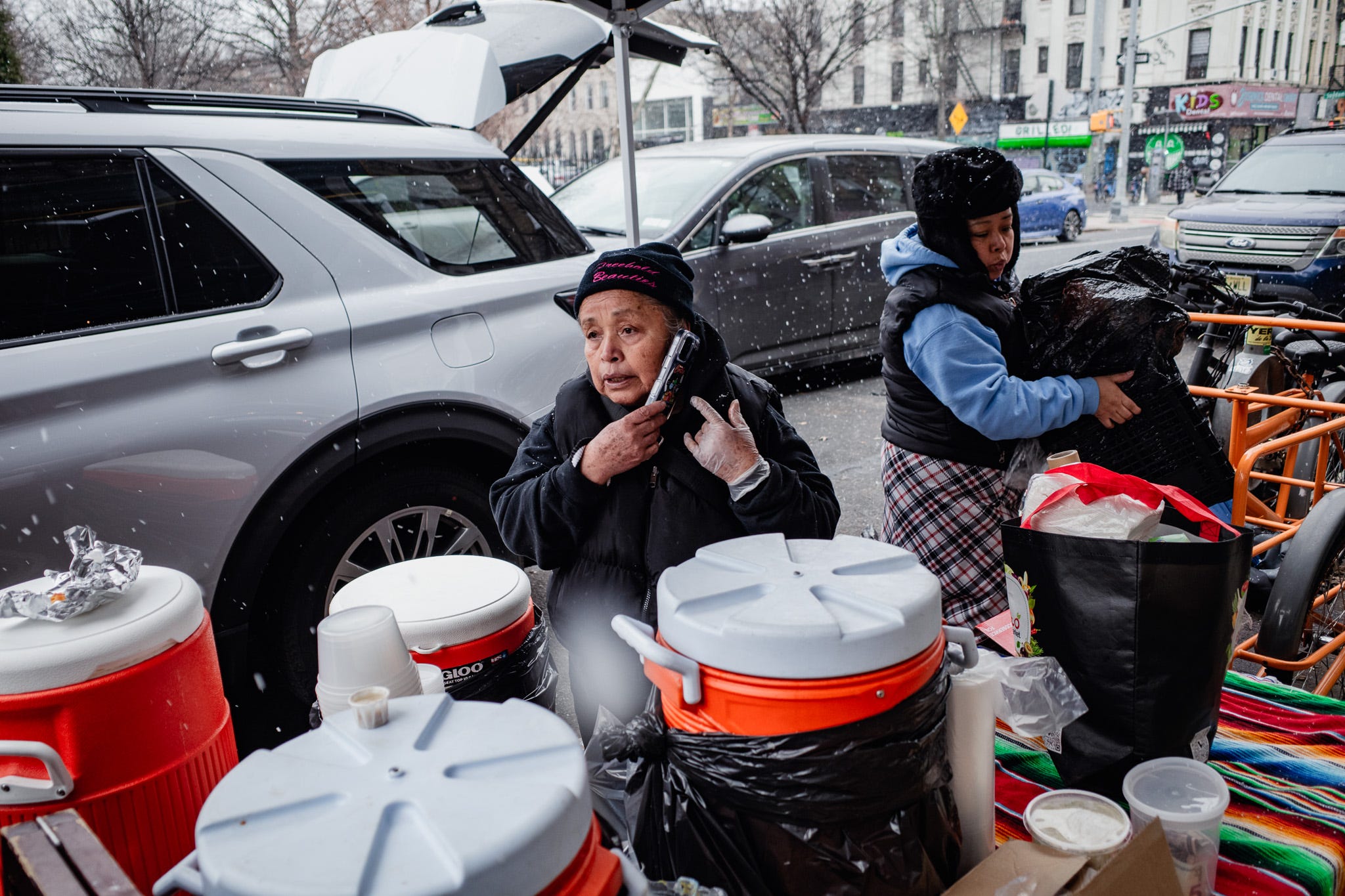
Blanca Pilar, a street vendor in Bushwick, sells tamales and masa from her own molino.
Blanca Pilar, a street vendor in Brooklyn, has her own molino in her home, which she uses to process corn to make fresh tamales and atole. This gives her a distinct advantage in the competitive world of street vending, where Maseca is used as a shortcut in the already labor-intensive work of making tamales.
“Making tamales takes almost three days,” she told me. “One day is for cooking the corn so I can wash it and grind it in the mill, because if it’s still hot, the masa doesn’t come out right. I cook it one day, wash and grind it the next, then start making the tamales, and by the third day they’re ready to sell.”
Pilar is not alone in her pursuit of authentic flavor, or in taking extra steps to ensure her tamales live up to people’s memories of home. Fernando Lopez of Factory Tamal goes even further, refining his masa through a process called cernir – sifting it to remove clumps and achieve the proper texture.
“As far as New York City goes,” Lopez explains, “they sell tamales, but most people make them with Maseca, and almost no one – really, no one – was making tamales from scratch. So, based on the flavor from when I was a child, I set out to recreate and rebuild the tamales I ate growing up.” Lopez wasn’t comfortable selling his tamales until the recipe was perfected, and when it received the stamp of approval from strangers, he knew his mission had been accomplished.
“Every time they ate, they were reminded of their grandmother,” he told me. “They’d say, ‘Oh, wow – this is like what your mom used to make, right?’ And that filled me with even more pride and motivation to keep going.”
Support our work at People & Food. Our writers are paid from our subscriptions, with no outside investors:
Supporting places that make masa from scratch means preserving ancient traditions diminished by free trade and globalization, while also honoring a food culture widely accepted in the U.S. without full consideration of its origins or the people behind it. Plus, it tastes better: “The flavor of my tamales is different from those made with Maseca,” Blanca said. “People come to me for the taste of the tamales – the flavor and even the texture. They tell me it reminds them of their hometown, their country, because they’re made from natural corn.”
While very few molinos exist in New York, masa availability is increasing thanks to wholesale distributors like Masienda and Tamoa. But one local business has been integral to onboarding restaurants like the 3 Michelin-Star Eleven Madison Park to the world of traditional nixtamalization: Sobre Masa.
From Oaxaca to Brooklyn
Diana Montano of Sobre Masa.
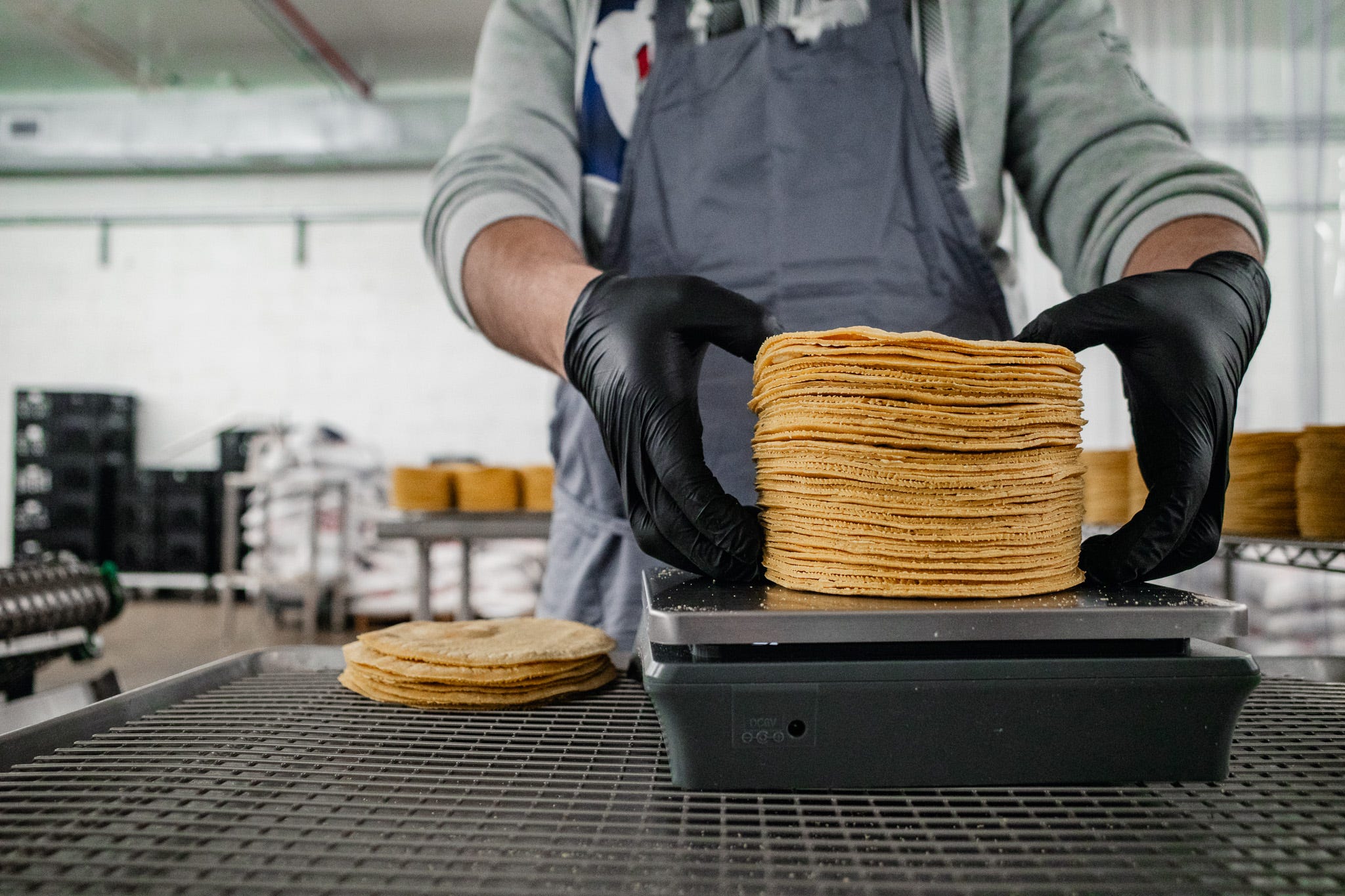
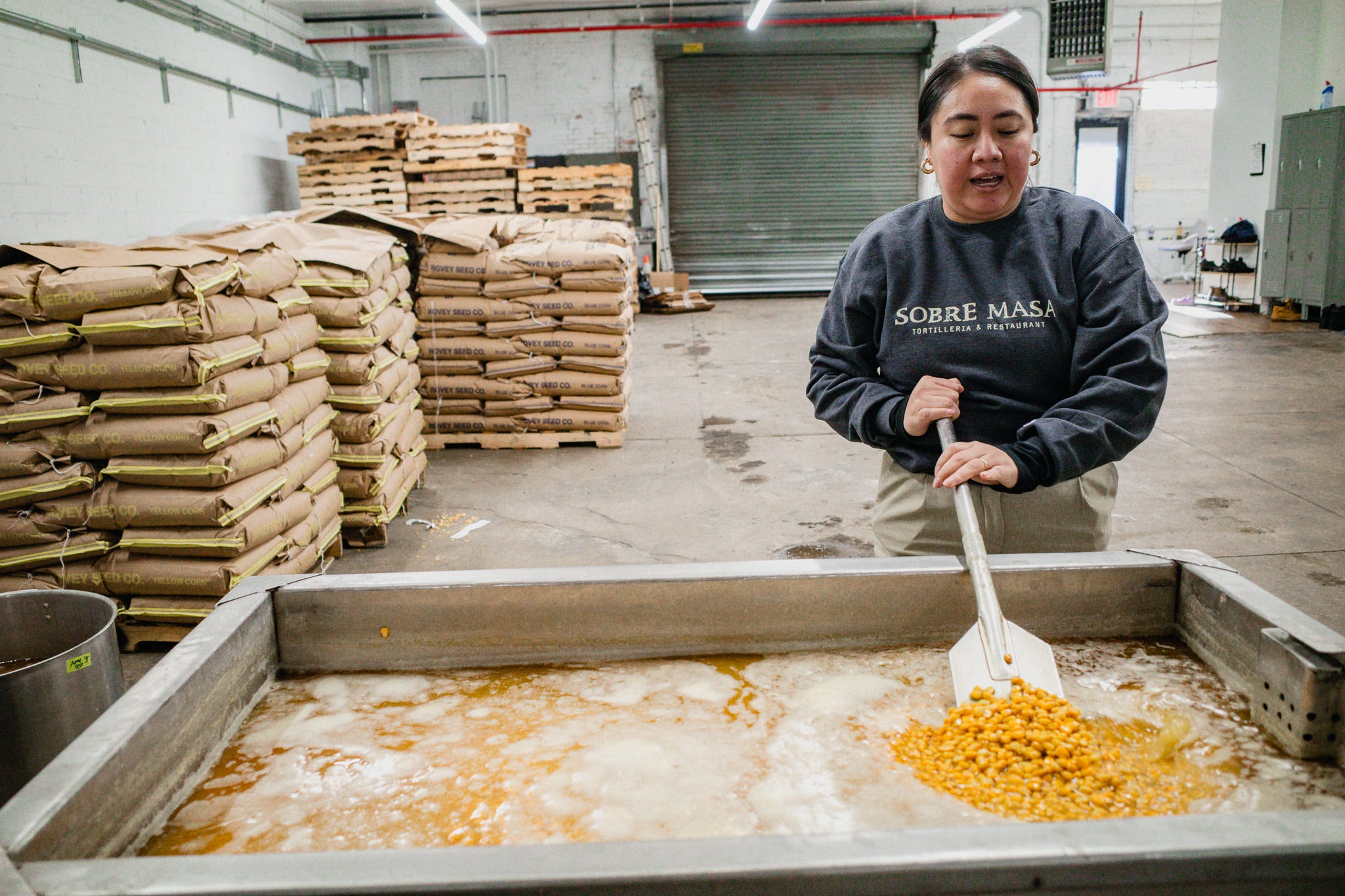
Sobre Masa began as a way for co-owners Zack Wangeman and Diana Montano to reconnect with their Oaxacan heritage. When the pandemic halted indoor dining, the business pivoted toward wholesale tortilla production – initially as a matter of financial survival. Five years later, both the restaurant and wholesale arms are flourishing. Today, Sobre Masa supplies fresh masa, tortillas, and even whole corn kernels to more than 35 clients across the city.
Beyond its own growth, Sobre Masa has become a model for others interested in working with traditional corn. When asked why more New York City restaurants don’t grind corn in-house, Zack’s answer is pragmatic: “Our tortilla factory has grown a lot because of how difficult it is. Labor is really expensive for restaurants, especially when you add nixtamalization and hand-pressing tortillas. Space is another issue – most kitchens are in basements... And the cost of heirloom corn is a barrier.”
He adds that Masienda’s minimum order of 20 bags raises a logistical question: “Where do people store that in New York City? That’s why we started selling corn, too.”
This year alone, Sobre Masa estimates it will bring in close to 100 tons of corn. What distinguishes their tortilla factory, however, is not just scale but flexibility. “If someone has a special event and wants us to mix in something like ramp purée, or if they prefer their tortilla chips a little thicker, we can do that,” Zack explains. “You can always call us if there’s an issue. I find that romantic – it’s how things used to work. You had a butcher, a produce guy. If something was coming into season, you’d call them. I like that we’re the tortilla people. You can call us for any corn question or corn need.”
Thanks to local molinos, more New York restaurants are receiving fresh, nixtamalized masa and tortillas. At the same time, the number of molinos across the city is steadily growing as existing businesses thrive. In their pursuit of flavor and heritage, these models offer inspiration.
For these select few, clear themes emerge: a commitment to preserving heirloom varieties, using all-natural ingredients, honoring Mexican culinary traditions, delivering the best possible flavor, and maintaining a deep sense of pride and care in their craft. Each is remarkable in its own way, and every one of them is worth seeking out.
For many tortilla makers, this work is more than food, it is a connection to identity, memory, and resistance. As Matt Diaz, co-owner of For All Things Good, a molino and cafe located in Bed-Stuy puts it, “We care where we put our money and like to know that it can get traced back to the farmers and families who have supported the corn industry and diversity for generations.”
“Tortillas brought my family closer and brought us a sense of purpose, showing people in New York City the Mexican experience. It is an analogy for my Mexican-American heritage, and my parent’s Mexican heritage, coming together to form something beautiful.” - Marc Vasquez, Mayahuel
A list of the 12 traditional molinos of New York
Continue reading this post for free, courtesy of Rob Martinez.