They call it Cascade Locks, but this town on the banks of the Columbia River used to be called Whiskey Flats. That’s the name on the sign of the local tavern, which is one of the few buildings on the main strip, along with a couple of breweries, a post office, and a fish market. The population? Less than 1,500.
“It’s hard to keep a secret in a little town like this,” Terrie Brigham tells me as we drive along Wa Na Pa Street. “But I kept a few. Back in the day.”
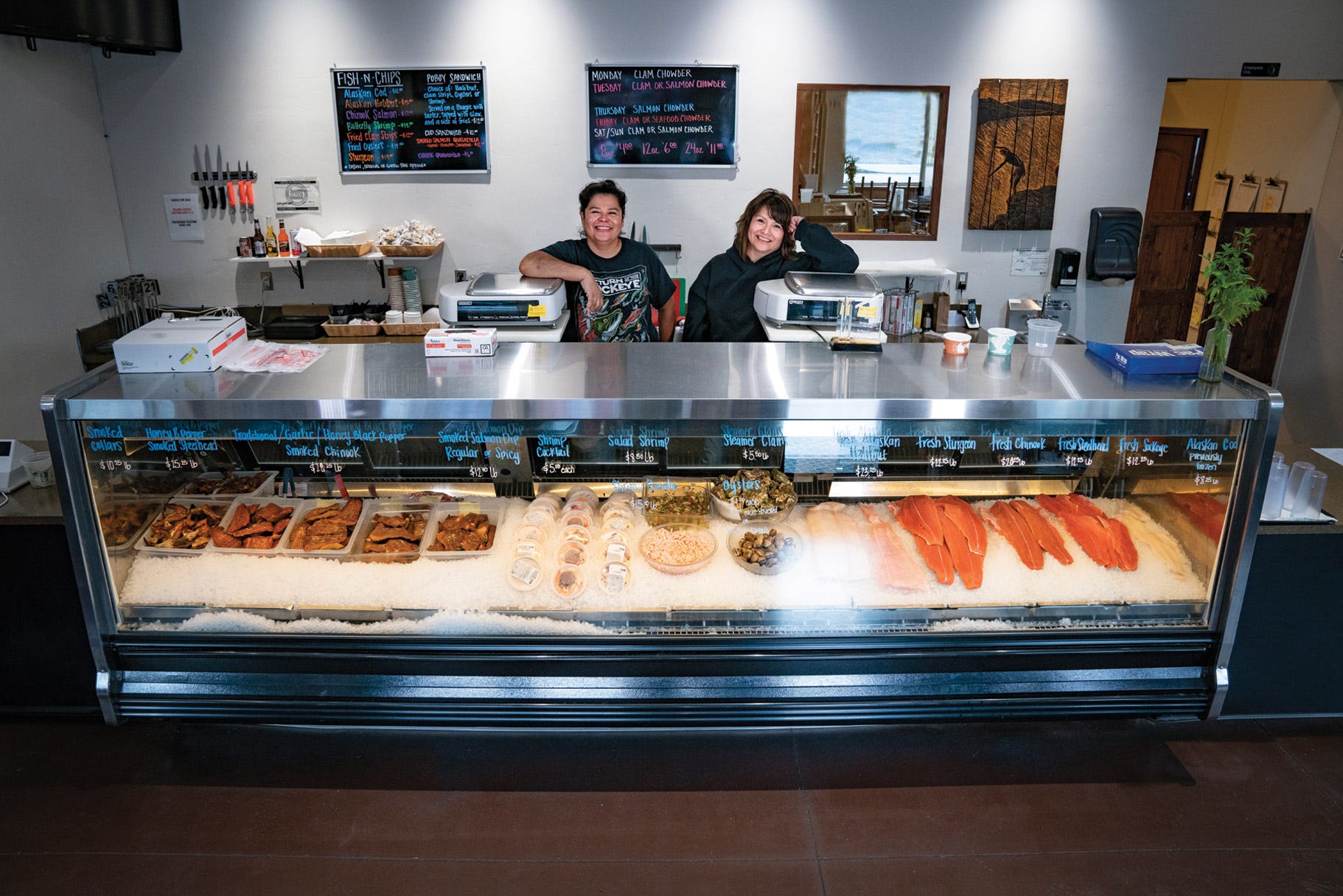
Terrie and her sister Kim are the owners of Brigham Fish Market here in Cascade Locks. Although fish have been sold in this area by Native fisherman for generations, it’s often been a side-hustle; Brigham is a rare Native-owned brick-and-mortar business. “Every fisherman that comes down here from summer to fall, that is their own business,” Terrie says. “They sell under the bridge—and we do the same thing when we’re down at the scaffold, out of coolers.”
We’re overlooking the swift-flowing Columbia now, looking at the scaffolds. “One thing that people need to know, these are property. This is my family’s property,” Terrie says. Looking towards the Bridge of the Gods in the distance, scaffolds dot each side of the banks. They hover above the water, some in better condition than others. During the season, native families perch here and fish on their scaffolds, as they’ve done here for millennia. Sometimes tourists try to fish off of them, which Terrie hasn’t always taken kindly to. “We built them. We’ve put the blood, sweat and tears into every one of them.”
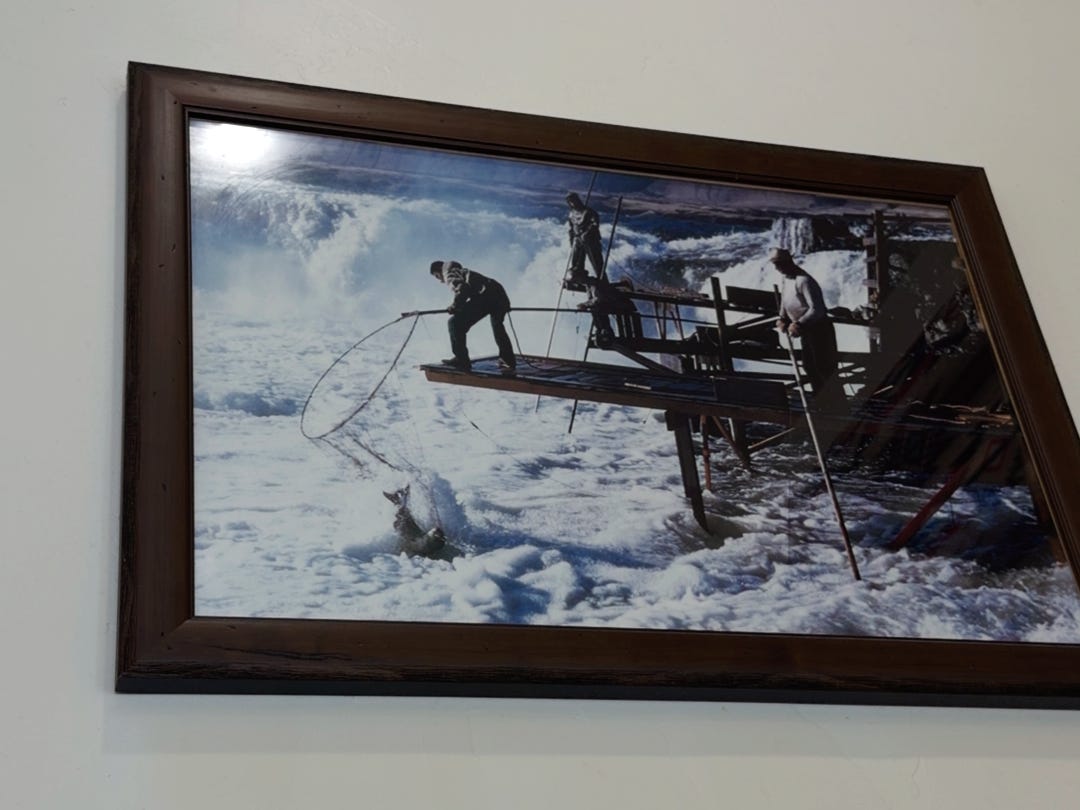
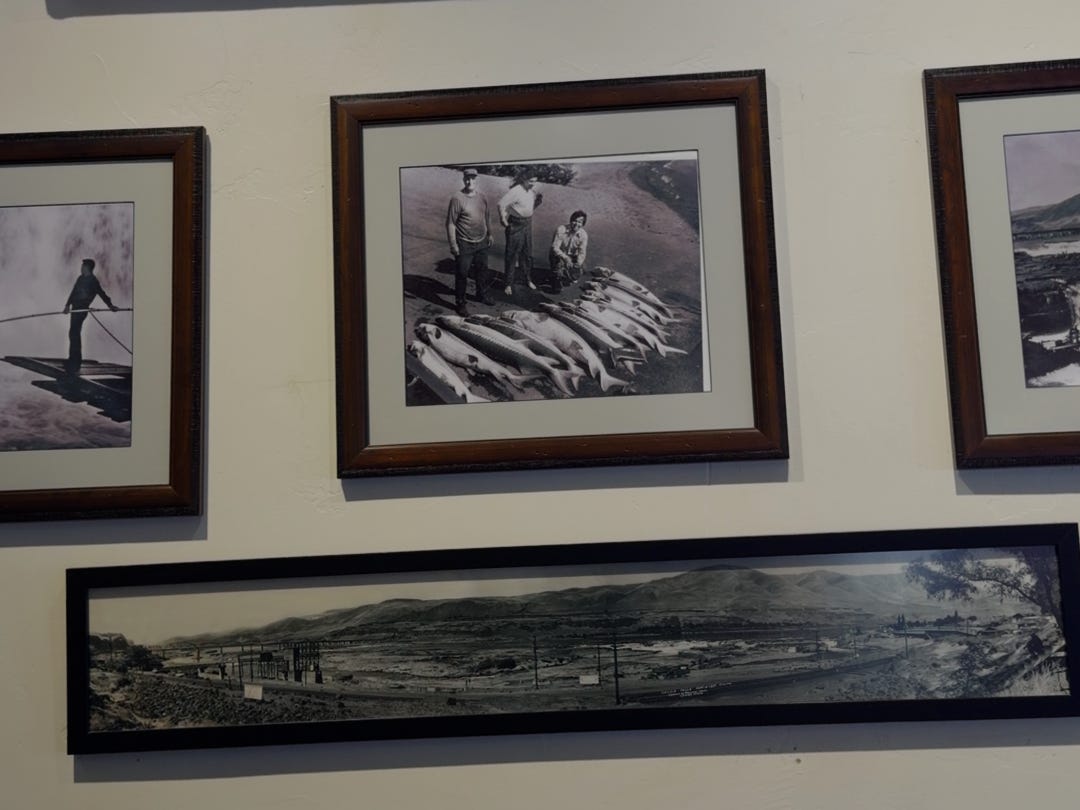
Talking to Terrie, you get the sense that she’s used to defending her rights, her property, her culture. As if at any point, they could be lost. Back at the market, she points to pictures on the wall. “Those are pictures of Celilo,” she says. Celilo Falls was a major trading hub and gathering place for over 15,000 years. In Native languages it was called Wyam, which referred to the sound the rushing falls made. The sound faded in 1957. “When they put the Dalles Dam, it backed up all the water and it buried her."
She points to another picture, “That’s where the village was flooded to,'“ she says. “It’s still there, above the railroad tracks. It’s the oldest living inhabited village in North America.”