


In Prospect Lefferts Gardens, Restaurant Ix always smells like something has been roasted with purpose. On a winter afternoon, the room warms up fast with steam and spice. Chef Jorge Cardénas runs the kitchen, and the menu reads like an invitation to learn: Quichón, Pepián, Jocón, Estofado de Muerto, and more.
I meet Jorge after the lunch rush, expecting a quiet room, but I find the opposite. Friends are still catching up over big bowls, and the odd solo diner leans in close to their stew. I come here often for the soups and stews, a coffee, or the off-menu Dr. Jaguar, a hot drink of herbs and spices that helps with a cold or the flu. But today I am here for something more foundational than any single dish.
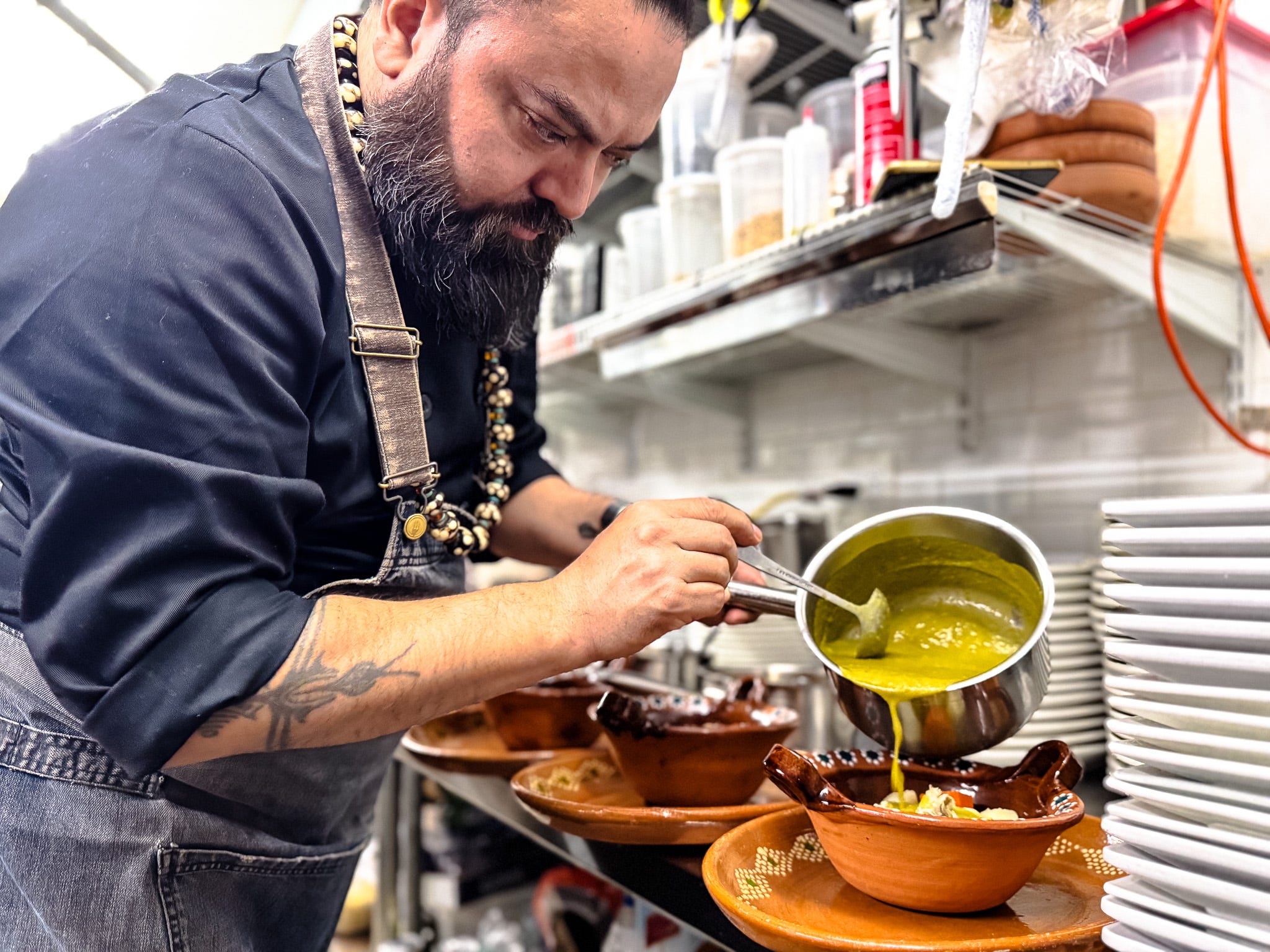
“The base just exists for minutes,” Jorge tells me. “You start with it, and it becomes a soup.” He is talking about recado, the mother base of Guatemalan stews. It can be a spice mix, a paste, or a thick slurry, but Jorge is clear about what it is not: It is not a sauce meant to be admired on its own.
“It doesn’t look sexy,” he says, smiling. “It’s not like guacamole.”
Recados are often divided into three groups: Rojo (Red), Verde (Green), Negro (Black). But when I bring this up, Jorge stops me. “We don’t put it in three colors,” he says. “It’s just different. We have like, I don’t know, 50, 80… like Mexican moles.”
The difference, he explains, is not the label, but what you do to the ingredients before they ever touch the pot. Even in a green recado, he might push ingredients toward darkness. Scallions can be roasted “until they are almost charcoal.” Tomatillos are never raw. “I like to scorch them until they are black.” The same direction can taste fresh and bright, or deep and smoky, depending on how hard you roast, toast, or burn.
In other words, a recado is not one of three master pastes waiting to be assigned. Jorge thinks dish by dish. Jocón has its recado, Pepián has its recado, Quichón has its recado. The rojo/verde/negro labels can be useful shorthand, but they do not capture how recados actually function in his kitchen.
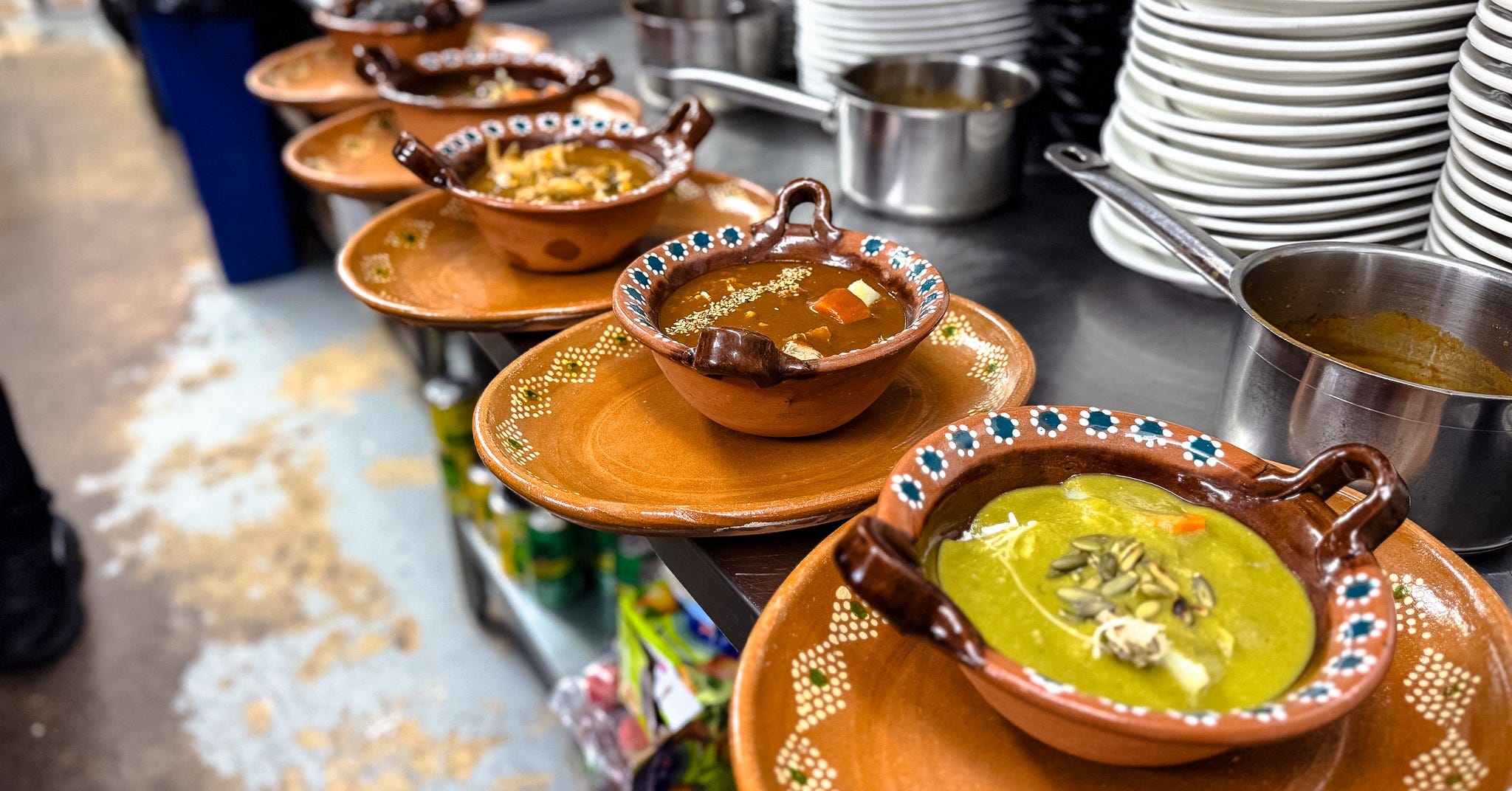
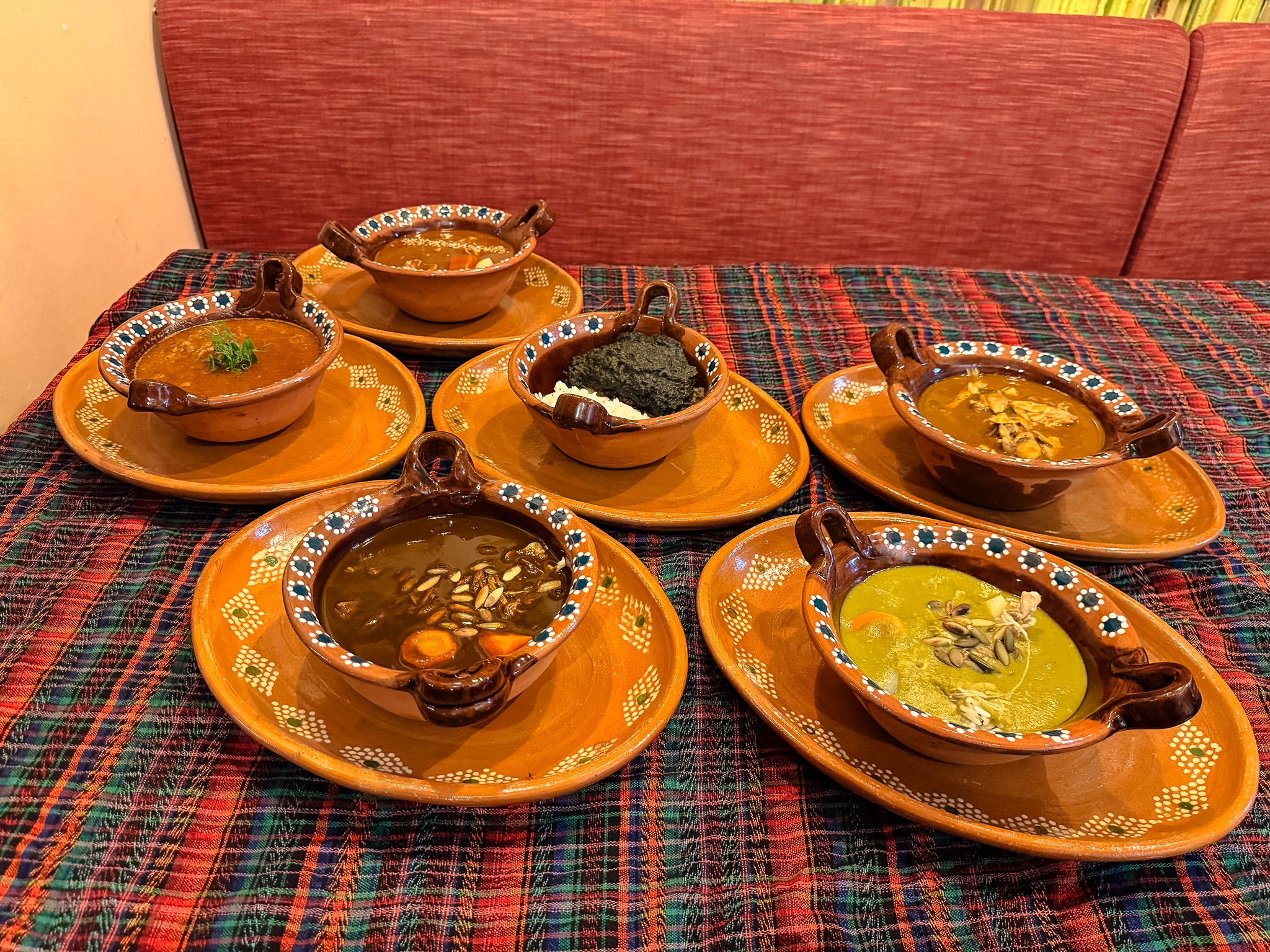
Luckily, we can taste at least 5 of these recados right here in Brooklyn. To help me understand, Jorge lines up a tasting flight for me, five bowls arranged like a spectrum. Seeing them together makes the concept click. The recado exists just briefly—before it becomes a plated dish.

